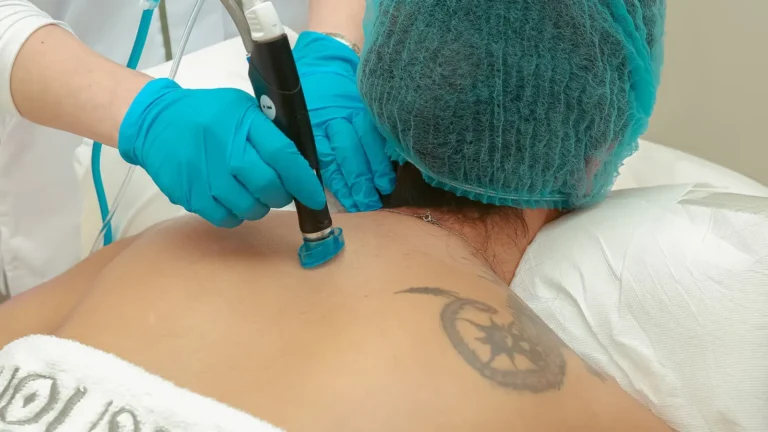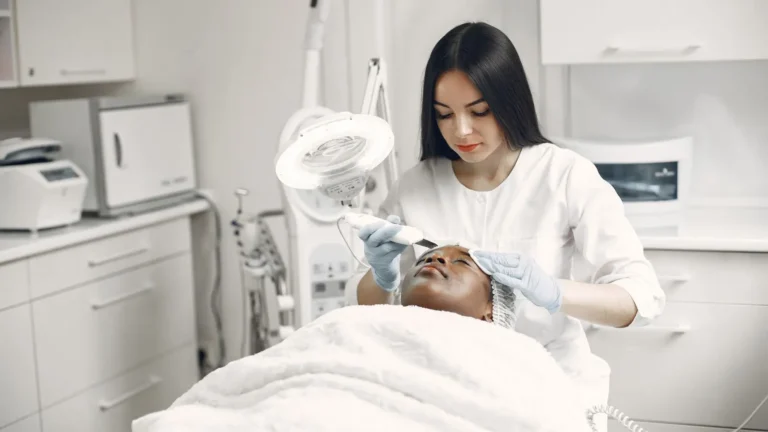
Laser tattoo removal in Sydney is usually priced per session, and the total cost depends mainly on the tattoo’s size, ink colours and how many sessions it needs. Most tattoos need several sessions spaced 6–8 weeks or more apart. At Envisage Cosmetic in Norwest, every tattoo is assessed at a tattoo removal consultation, and you receive a quote for your tattoo before starting.
What decides the cost of tattoo removal
| Size of the tattoo | Larger areas take longer to treat, so each session costs more |
|---|---|
| Ink colours | Black and dark blue usually respond best; some colours such as green, yellow and light blue can be harder to fade |
| Ink density and age | Professional tattoos often hold more ink than amateur ones; older tattoos may fade faster |
| Location on the body | Areas with good circulation, closer to the heart, tend to clear faster than hands, feet and ankles |
| Goal | Fading a tattoo for a cover-up usually takes fewer sessions than full removal |
| Your skin and health | Skin tone, smoking and general health can affect how quickly ink clears |
How many sessions will I need?
There is no single number, which is why an honest clinic quotes after seeing your tattoo. Many tattoos need somewhere between 6 and 12 sessions for substantial fading, and some need more. Sessions are spaced several weeks apart, commonly 6–8 weeks or longer, because the body’s immune system removes the shattered ink particles gradually between treatments. A full course can therefore take a year or more. We explain what changes your number in how many sessions it takes to remove a tattoo.
Some tattoos cannot be removed completely, and some leave a faint ghost image or a change in skin texture or colour. A good practitioner will tell you this at the start.
Why per-session prices vary between Sydney clinics
- Laser technology. Different lasers suit different ink colours and skin types.
- Practitioner experience and safety. Laser energy that is set too high can scar the skin. Ask who will perform the treatment and what training they have.
- What is included. Check whether aftercare, numbing and follow-up reviews are included in the price.
- Packages. Some clinics discount a course of sessions. Make sure you understand what happens if your tattoo clears faster or slower than expected.
Eyebrow and cosmetic tattoo removal
Cosmetic tattoos, such as eyebrow feathering or microblading, are usually small, so each session is shorter. Cosmetic pigments can contain ingredients that react differently to laser, including some that darken, so a patch test and careful assessment are important. We cover this in more detail in our guide to eyebrow tattoo removal.
What a tattoo removal consultation covers
- A look at the tattoo’s size, colours, age and location.
- A review of your medical history, medications and skin type.
- A realistic estimate of the number of sessions and the expected result: removal or fading.
- A quote for each session and for the full course.
- Aftercare instructions, including sun protection for the treated area.
How laser tattoo removal works
Tattoo ink sits in the dermis as particles too large for the body to remove. A tattoo-removal laser delivers very short, high-energy pulses that the ink absorbs. This shatters the particles into smaller fragments. It is a different device from the light-based treatments used for hair reduction, which we compare in IPL vs laser hair removal. Over the following weeks, the immune system carries those fragments away through the lymphatic system, and the tattoo fades gradually. Because the body does the clearing, there is no shortcut: treating more often doesn’t make it clear faster, and it raises the risk of side effects.
A realistic tattoo removal timeline
| Stage | What to expect |
|---|---|
| Consultation | Assessment, medical history, patch test where needed, and a quote |
| Session 1 | Immediate whitening (frosting) that fades within about 30 minutes; redness and swelling for a few days |
| Weeks 1–2 | Possible blistering and scabbing while the skin heals |
| Weeks 2–8 | The tattoo slowly lightens as ink is cleared |
| Sessions 2–4 | Noticeable fading for most black tattoos |
| Sessions 5–12+ | Further fading towards removal or cover-up readiness |
With sessions 6–8 weeks apart, a course of 8 sessions takes around 12–15 months.
Budgeting for tattoo removal
Because the number of sessions varies, budget for a range rather than a single figure. A simple way to estimate:
- Get your per-session quote at consultation. It is based on the size of the treatment area.
- Multiply it by a low and a high estimate for sessions, for example 6 and 10.
- Ask whether the price changes as the tattoo fades, or whether a package is available.
Fading a tattoo for a cover-up usually takes fewer sessions than full removal, so it’s often the lower-cost option.
Professional, amateur and cosmetic tattoos compared
| Type | How it usually responds |
|---|---|
| Professional, black ink | Responds well but holds a lot of ink, so it often needs more sessions |
| Amateur or home-made | Less ink, often clears in fewer sessions |
| Multi-coloured | Black, dark blue and red usually respond best; green, light blue, yellow and white are harder |
| Cosmetic (brows, liner, lips) | Small area, but some pigments can darken with laser, so a patch test is essential |
| Older tattoos | Often fade faster, because some ink has already broken down |
Who should not have laser tattoo removal (yet)
- Pregnant or breastfeeding.
- Tanned skin or recent sun exposure on the area.
- Taking medicines that increase light sensitivity, or recent use of prescription acne medicine.
- A history of keloid scarring, or an active infection or cold sore in the area.
- Some medical conditions affecting healing. We check your history at consultation.
Aftercare that protects your skin and your results
- Keep the area clean and dry, and apply the recommended ointment and dressing.
- Don’t pick or pop blisters or scabs. Let them heal on their own.
- Avoid swimming, saunas and spas until the skin has healed.
- Keep the area out of the sun and use SPF 50+ once healed. Tanning between sessions slows progress and raises the risk of pigment changes.
- Stay well hydrated, stay active and don’t smoke. These support the body’s natural clearing.
What happens at a laser tattoo removal session
- Check-in and review. We look at how the tattoo responded last time and check that the skin has fully healed.
- Protection. You and the practitioner wear protective eyewear for the laser.
- Cooling. The area may be cooled to make treatment more comfortable.
- Treatment. The laser passes over the tattoo in short pulses. A small tattoo can take just a few minutes; larger ones take longer.
- Dressing. A soothing ointment and dressing are applied, and you get aftercare instructions and a date for your next session.
Why some colours are harder to remove
Each laser wavelength is absorbed best by certain colours. Black ink absorbs a wide range of wavelengths, which is why it usually responds well. Red, orange and dark blue often respond reasonably. Green, light blue, yellow, white and fluorescent inks absorb less of the common wavelengths, so they fade more slowly and may not clear completely. Some white and flesh-toned cosmetic inks contain ingredients that can darken when treated. This is one reason a patch test matters for cosmetic tattoos.
Laser removal vs other options
| Option | How it works | Things to know |
|---|---|---|
| Laser tattoo removal | Breaks ink into particles the body clears | The standard approach; several sessions; lowest scarring risk when done well |
| Fading for a cover-up | Fewer laser sessions to lighten the old design | Gives the tattoo artist more freedom; usually cheaper than full removal |
| Surgical excision | The tattooed skin is cut out and stitched | Only suits small tattoos; leaves a surgical scar; done by a doctor |
| Removal creams | Claim to fade ink through the skin | Not shown to work reliably, and can burn or scar the skin; not recommended |
Common tattoo removal myths
- “Laser removal always scars.” When performed with appropriate settings and good aftercare, scarring is uncommon, but it is a possible risk.
- “More frequent sessions remove it faster.” The body needs weeks to clear ink. Treating too soon adds risk without speeding things up.
- “New tattoos can’t be removed.” A tattoo should be fully healed first, usually at least a few months old, but newer tattoos can be treated.
- “Tattoo removal is a one-off treatment.” It almost always takes a course of sessions over many months.
Questions to ask any tattoo removal clinic
- Who will perform the treatment, and what is their training?
- Which laser will be used, and does it suit my ink colours and skin type?
- Will you patch test first?
- How many sessions do you expect, and what result is realistic: removal or fading?
- What does each session cost, and does the price change as the tattoo fades?
Laser tattoo removal in Norwest
Envisage Cosmetic offers laser tattoo removal at 416/7 Maitland Place, Norwest, close to Castle Hill, Bella Vista and Baulkham Hills. Request a tattoo removal consultation to get an assessment and a quote for your tattoo.
How the tattoo’s location affects removal
| Location | Typical response |
|---|---|
| Upper arm, chest, back, neck | Good circulation; often fades faster |
| Forearm, thigh | Moderate |
| Hands, fingers, feet, ankles | Further from the heart, with less circulation; often slower and may need more sessions |
| Face and eyebrows | Usually small areas; needs careful technique and eye protection |
Supporting your body between sessions
Because your immune system clears the ink, general health plays a part. Things that may support the process include staying active, drinking enough water, not smoking, and keeping the treated skin protected from the sun. None of these replace sessions, but smoking in particular is associated with slower clearance.
Key takeaways
- Cost depends mainly on the tattoo’s size, ink colours, location and the number of sessions.
- Most tattoos need 6–12 sessions spaced 6–8 weeks or more apart.
- Black ink usually responds best; some colours and cosmetic inks are harder to clear.
- Fading for a cover-up usually takes fewer sessions than full removal.
- At Envisage, you receive a quote for your tattoo at a consultation before any treatment.
Frequently asked questions
How much does laser tattoo removal cost per session?
Per-session prices depend on the tattoo’s size, colours and location, so clinics usually quote after a consultation. At Envisage Cosmetic in Norwest, you receive a quote for your specific tattoo before any treatment starts.
How many sessions does tattoo removal take?
Many tattoos need 6–12 sessions for substantial fading, spaced 6–8 weeks or more apart. Small, black or older tattoos may need fewer; large, colourful or dense tattoos may need more.
Does laser tattoo removal hurt?
Most people describe it as a sharp snapping or stinging feeling. Sessions are short, and cooling or numbing can make treatment more comfortable.
Can every tattoo be removed completely?
No. Some tattoos fade a great deal but leave a faint ghost image, and some colours are harder to clear. Fading for a cover-up tattoo is often achievable in fewer sessions.
What are the risks of laser tattoo removal?
Common short-term effects include redness, swelling, blistering and scabbing. Less commonly, the skin can lighten or darken, change texture or scar. Choosing a trained practitioner and following aftercare instructions lowers these risks.
How long should I wait between tattoo removal sessions?
Usually at least 6–8 weeks, so the body has time to clear the ink and the skin can heal fully. Treating too soon doesn’t speed up removal and raises the risk of side effects.
Can I get a new tattoo over a faded one?
Yes. Many people fade a tattoo with a few sessions so a tattoo artist can cover it more easily. Wait until the skin has fully healed, and check timing with your artist.
Is tattoo removal more expensive than getting the tattoo?
Often, yes, because removal takes several sessions over a year or more. Getting a quote at consultation helps you plan the total cost.
Can I have tattoo removal in summer?
Yes, as long as the treated area is kept out of the sun and protected with clothing and SPF 50+. Tanned skin may need treatment to be delayed.
Will my skin go back to normal after removal?
Usually the skin returns close to its normal appearance, but some people are left with a faint ghost image, lighter or darker patches, or a change in texture. These risks are discussed at consultation.
Sources: DermNet: tattoo-associated skin reactions and laser removal.