HydraFacial and dermaplaning both remove dead skin, but they do different jobs. Dermaplaning shaves off dead cells and fine facial hair with a sterile blade. A HydraFacial exfoliates, extracts congested pores and infuses hydrating serums in one session. At Envisage Cosmetic in Norwest, HydraFacial starts at $240; we don’t offer dermaplaning.
Summarise this article with AI
HydraFacial vs dermaplaning at a glance
The main difference is that dermaplaning works only on the very top layer of skin and the fine hair on it, while a HydraFacial also clears pores and adds hydration. The table below sums up how the two compare.
| HydraFacial | Dermaplaning | |
|---|---|---|
| How it exfoliates | Vortex tip with exfoliating solutions and gentle suction | A sterile blade scraped lightly across the skin |
| Removes fine facial hair | No | Yes, the soft “peach fuzz” (vellus hair) |
| Pore extraction | Yes, built-in vacuum extraction | No |
| Hydration | Serums infused at the end | Not part of the treatment |
| Feels like | Cool, wet, light suction | Light scraping; usually comfortable |
| Downtime | None for most people | Usually none; occasional redness or small nicks |
| Best for | Congestion, dullness, dehydration, many sensitive skins | Dull, dry surface skin and fine facial hair on calm, clear skin |
| At Envisage Cosmetic | Signature $240, Deluxe $280, Platinum $320 | Not offered |
What dermaplaning is and how it works
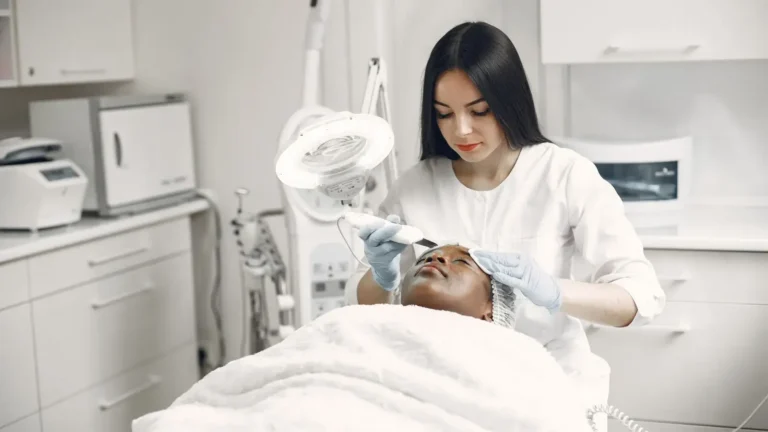
Dermaplaning is a manual exfoliation in which a practitioner holds a sterile, single-use blade at a shallow angle and makes short, light strokes across the face. The blade lifts away the outermost dead skin cells and the fine vellus hair that sits on the cheeks, jaw and forehead.
Because it only treats the surface, it doesn’t reach the pores or the deeper layers of skin where collagen sits. What people notice is an immediate smoothness and a brighter look, and makeup tends to go on more evenly for a few weeks.
Dermaplaning is sometimes added to the start of another facial, because removing the dead layer can help products absorb. On its own, it is a simple treatment, but technique matters: an unsteady hand or a blunt blade can nick or irritate the skin.
What a HydraFacial is and how it works
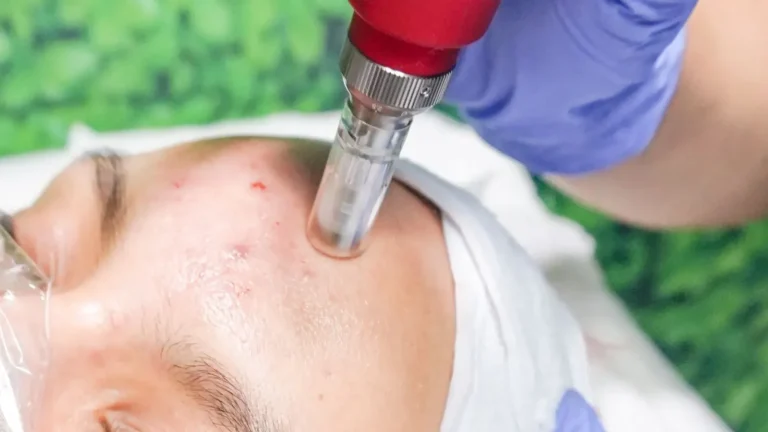
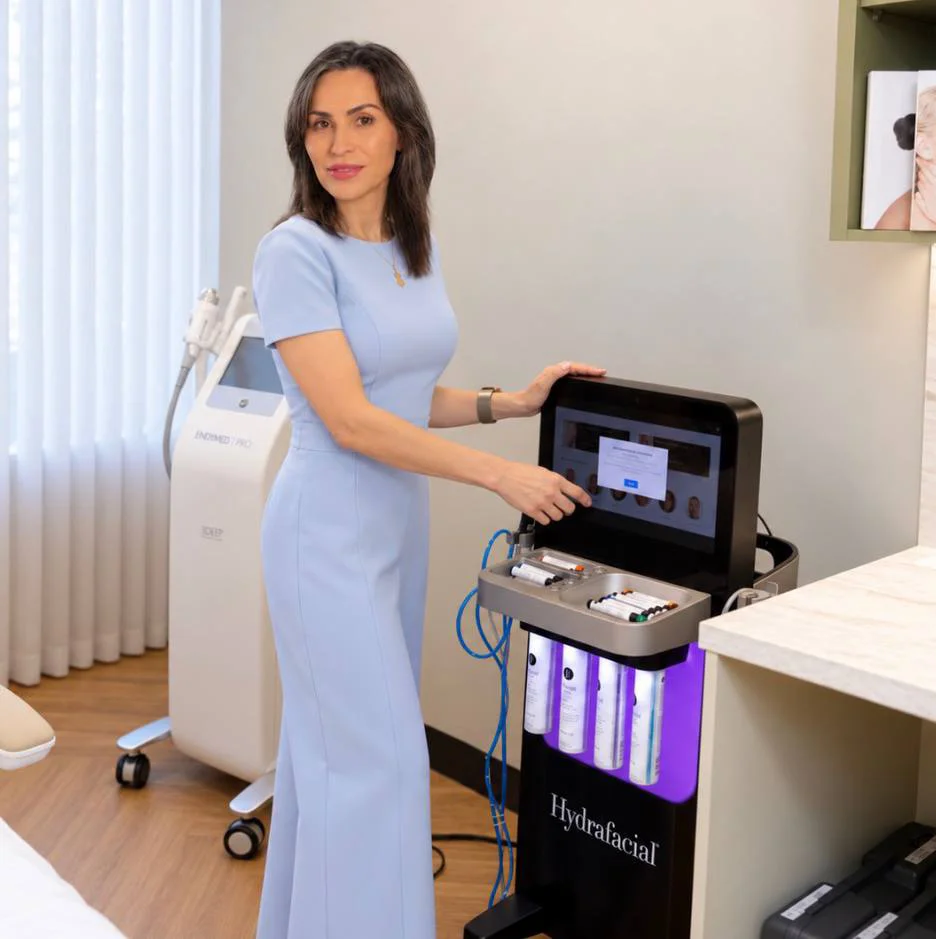
A HydraFacial is a multi-step facial performed with a dedicated device whose spiral tip combines exfoliation with suction. Rather than scraping the skin, it loosens dead cells and debris with exfoliating solutions, then lifts them away.
The same session also includes vacuum extraction of blackheads and congestion, followed by infusion of antioxidant and hydrating serums. That combination is why a HydraFacial suits a wider range of concerns than a single exfoliation method. The tip stays wet throughout, so most people find it comfortable and leave without redness.
Step by step: what happens on the day
Both treatments take under an hour and need no numbing, but the steps are quite different.
A typical dermaplaning session
- The skin is cleansed thoroughly and dried, because the blade glides best on dry skin.
- The practitioner holds the skin taut with one hand and uses short, feathering strokes with the blade in the other.
- Each area of the face is treated, avoiding the eyelids, nose edges and any spots or broken skin.
- A soothing serum or moisturiser is applied, followed by sunscreen.
A typical HydraFacial at Envisage
- A skin check and a short chat about your concerns, medicines and skincare routine.
- Cleansing and gentle exfoliation with the vortex tip.
- A mild acid solution to loosen oil and debris in the pores.
- Vacuum extraction to clear blackheads and congestion.
- Infusion of hydrating and antioxidant serums. Deluxe and Platinum treatments add a targeted booster, LED light therapy and, in Platinum, lymphatic drainage.
- Sunscreen and aftercare advice before you leave.
Results timeline: what to expect
Both treatments give a quick glow, but they differ in what lasts and how often they need repeating.
| Time after treatment | HydraFacial | Dermaplaning |
|---|---|---|
| Same day | Plump, hydrated, glowing skin; any pinkness fades within hours | Very smooth, bright skin; possible mild redness |
| Week 1 | Glow usually at its best; pores look clearer | Smooth feel; makeup sits evenly |
| Weeks 2–4 | Skin gradually returns to its usual pattern of congestion | Fine hair starts to grow back; dead cells build up again |
| Months 1–3 (regular treatment) | Clearer pores, better hydration, more even texture | Ongoing surface smoothness while treatments continue |
| Typical spacing | Every 4–6 weeks | Every 3–4 weeks |
Which is better for your skin type?
For most skin types, a HydraFacial is the more versatile choice, while dermaplaning suits calm, clear skin whose main concern is dullness or fine facial hair.
| Skin type or concern | HydraFacial | Dermaplaning |
|---|---|---|
| Oily or congested | Very suitable; extraction clears pores | Doesn’t clear pores; can irritate if oily skin is also breakout-prone |
| Dry or dehydrated | Very suitable; serums add hydration | Helps flaky surface skin but adds no hydration |
| Active acne | Assessment first; sometimes adjusted or delayed | Usually avoided, as the blade can catch spots and spread bacteria |
| Sensitive or rosacea-prone | Often suitable after assessment, on gentle settings | Often too irritating |
| Fine facial hair | No effect on hair | Removes it temporarily |
| Mature or dry skin | Suitable; hydration softens fine lines for a while | Suitable for surface texture; thin skin needs a light hand |
| Darker skin tones | Generally well tolerated | Generally suitable if done carefully; irritation can leave dark marks |
Who should avoid or wait
Some people should wait or choose a different treatment, whichever exfoliation they are considering. Tell your practitioner if any of these apply to you:
- Active acne, cold sores or broken skin: exfoliating over these can spread infection or worsen inflammation. Cold sores in particular should be fully healed.
- Prescription acne or skin medicines: oral acne tablets and strong prescription creams make skin fragile. You may need to wait several months after finishing oral acne medicine; your doctor can advise.
- Rosacea, eczema or dermatitis flares: treatment is usually delayed until the skin settles.
- Pregnancy: a gentle HydraFacial can often be adjusted, but some serums and boosters are avoided. Always mention pregnancy or breastfeeding.
- Recent sunburn, waxing or other resurfacing treatments: give the skin time to recover first.
- Raised moles, skin lesions or a changing spot: these are avoided during treatment, and any changing spot should be checked by a doctor.
- Exfoliates, extracts and hydrates in one session
- Comfortable, with no downtime for most people
- Suits many skin types, including congested skin
- Doesn't remove fine facial hair
- Results fade without regular treatments
- Not deep enough for scars or loose skin
Risks and side effects
Both treatments are low-risk when performed by a trained practitioner, but neither is risk-free. Common and less common effects include:
- HydraFacial: mild redness or warmth for a few hours; rarely, a reaction to a serum or booster; occasionally a few breakouts as congestion clears.
- Dermaplaning: redness, small nicks or cuts, sensitivity, and breakouts. Irritation can lead to temporary dark marks, especially in darker skin.
- Both: freshly exfoliated skin burns more easily, so sun protection matters even more in the days after treatment.
If you notice swelling, blistering, spreading redness or signs of infection after any facial, contact the clinic or your GP.
How to prepare and aftercare
Good preparation and aftercare make either treatment more comfortable and help results last longer.
Before your appointment
- Stop retinol, exfoliating acids and scrubs 2–3 days before.
- Avoid waxing, threading or hair-removal creams on the face for about a week.
- Don’t book straight after a sunburn or a beach weekend.
- Come with clean skin if you can, and bring a list of the medicines and skincare you use.
After your appointment
- Use a gentle cleanser and a simple moisturiser for 48 hours.
- Skip retinoids, acids and scrubs for 2–3 days.
- Avoid saunas, steam rooms, swimming pools and hard exercise on the day.
- Apply SPF 50+ every morning and reapply outdoors.
- Wait until the next day for heavy makeup if your skin feels warm or sensitive.
Common myths
- “Dermaplaning makes hair grow back thicker and darker.” It doesn’t. Cutting hair at the surface doesn’t change the follicle, so the fine hair grows back the same; it may feel blunt for a short time because the tip is cut straight.
- “Any exfoliation is good exfoliation.” Over-exfoliating weakens the skin barrier and can cause redness, stinging and breakouts. Combining dermaplaning with strong acids or scrubs at home is a common cause.
- “A HydraFacial is just a fancy wash.” It includes extraction and serum infusion, which simple cleansing or exfoliation doesn’t.
- “One facial will fix my skin.” Both give a short-term glow. Lasting change comes from a routine, good home care and, for deeper concerns, targeted treatments.
- “Home dermaplaning razors give the same result.” They can remove fine hair, but technique, hygiene and skin assessment are harder to get right at home, and nicks and breakouts are more common.
Comparison with other options
If your main concern goes beyond surface dullness, other treatments may suit you better than either facial. Here is how the closest options compare.
| Treatment | What it targets | Downtime | At Envisage |
|---|---|---|---|
| HydraFacial | Congestion, dullness, dehydration | None for most | Yes, from $240 |
| Dermaplaning | Surface dead skin and fine hair | Usually none | Not offered |
| Carbon laser facial | Oily skin, enlarged-looking pores, dullness | Minimal | Yes, from $210 |
| LED light therapy | Redness, breakouts, recovery support | None | Yes, $75 per session |
| RF microneedling | Acne scars, texture, enlarged pores | A few days of redness | Yes, packages from $1,200 |
| IPL hair reduction | Longer-term reduction of darker facial hair | Minimal | Yes, quoted at consultation |
Note that dermaplaning and IPL hair reduction do different things: dermaplaning cuts fine, pale hair at the surface, while IPL targets pigment in darker hair at the root and doesn’t work well on very fair or fine hair.
Cost at Envisage and a yearly budget
A HydraFacial at Envisage Cosmetic costs $240 for the Signature, $280 for the Deluxe and $320 for the Platinum treatment, based on our current price list. Because results build with regular treatment, it helps to think about a year rather than a single visit.
| Routine at Envisage | Treatments a year | Approximate cost |
|---|---|---|
| Signature HydraFacial every 6 weeks | 9 | $2,160 |
| Signature HydraFacial every 8 weeks | 6–7 | $1,440–$1,680 |
| Deluxe HydraFacial every 8 weeks | 6–7 | $1,680–$1,960 |
| Seasonal Platinum HydraFacial (4 a year) | 4 | $1,280 |
Based on the Envisage price list checked in November 2026. For a full breakdown of what each tier includes, see our HydraFacial cost guide.
A quick decision guide
Use this guide as a starting point; a skin assessment will confirm what suits you.
| If you… | Consider |
|---|---|
| Have blackheads and congested pores | HydraFacial |
| Have dry, tight or dehydrated skin | HydraFacial |
| Mainly want fine facial hair gone before makeup | Dermaplaning elsewhere, or ask about IPL if the hair is dark |
| Have sensitive or redness-prone skin | HydraFacial after assessment, or LED light therapy |
| Have oily skin and pores that look enlarged | Carbon laser facial |
| Have acne scars or rough texture | RF microneedling |
| Want an event-ready glow with no downtime | HydraFacial 3–5 days before |
A Sydney angle: sun, seasons and timing
Sydney’s high UV levels mean that any exfoliating treatment should be followed by careful sun protection. Cancer Council Australia recommends sun protection whenever the UV index is 3 or above, which in Sydney covers much of the year.
- Summer: both treatments are fine year-round, but plan outdoor activities, beach days and long sport sessions for a few days after, not the same day.
- Autumn and winter: indoor heating and cooler air dry out the skin, which is when hydration from a HydraFacial is especially welcome.
- Before events: spring weddings and end-of-year functions are popular times to book; allow 3–5 days before the date.
Between treatments, a gentle exfoliant once or twice a week is plenty. If you’d like one, our exfoliants and peels range includes milder options; ask us which suits your skin, and don’t use them in the days around a facial.
HydraFacial at Envisage Cosmetic, Norwest
Envisage Cosmetic is a nurse-led skin clinic at 416/7 Maitland Place, Norwest, a short drive from Castle Hill, Bella Vista, Baulkham Hills and Kellyville. HydraFacial is the facial we offer, alongside laser, IPL, LED and RF skin treatments. Treatments are carried out by Faranak Salehi, an Ahpra-registered nurse, after a skin assessment.
Read more about our HydraFacial treatment or compare facial options in our guide to facials near Castle Hill and Norwest. To talk through HydraFacial or dermaplaning for your skin, book a free consultation. We’re open Monday to Friday 10am–6pm and weekends 11am–4pm, or call (02) 7205 3810.
Frequently asked questions
Is HydraFacial better than dermaplaning?
For most people, a HydraFacial does more, because it exfoliates, clears pores and hydrates in one session. Dermaplaning is better only if your main goal is removing fine facial hair from calm, clear skin.
Does dermaplaning make hair grow back thicker?
No. Dermaplaning cuts fine hair at the surface and doesn’t change the hair follicle, so hair grows back the same thickness and colour.
Can I have dermaplaning and a HydraFacial together?
Some clinics combine them, but doing both on the same day increases the risk of irritation for sensitive skin. Envisage doesn’t offer dermaplaning; if you have it elsewhere, leave about two weeks before a HydraFacial.
Is dermaplaning safe for acne-prone skin?
Dermaplaning is usually avoided over active acne, because the blade can catch spots, irritate them and spread bacteria. A HydraFacial may suit congested skin after an assessment, and some active acne needs a doctor’s review first.
How often should I have a HydraFacial?
Every 4–6 weeks is typical for maintenance. Before an event, book it 3–5 days beforehand.
How much does a HydraFacial cost at Envisage?
Signature $240, Deluxe $280 and Platinum $320, based on our price list checked in November 2026.
Does a HydraFacial hurt?
Most people find it comfortable. It feels cool and wet with light suction, and extraction can feel like a gentle pull. Tell your practitioner if anything feels uncomfortable.
Which is better before makeup or an event?
Dermaplaning gives an especially smooth base for makeup, while a HydraFacial adds hydration and usually leaves no redness. For most people, a HydraFacial 3–5 days before is the safer choice.
Can I do dermaplaning at home?
Home facial razors can remove fine hair, but nicks, irritation and breakouts are more common without training and good hygiene. Never use a blade over spots, cold sores or broken skin.
Is HydraFacial suitable for men?
Yes. HydraFacial suits men’s skin, including congestion around the beard area. Dermaplaning isn’t designed for areas with coarse beard hair.
Sources: DermNet: dermabrasion and microdermabrasion; DermNet: rosacea; healthdirect: acne; Cancer Council Australia: sun safety; Envisage Cosmetic treatment information and price list (November 2026).